Turin. THE ARCHITECTURAL JEWELS OF THE CITY OF SABAUDA
June 20, 2020
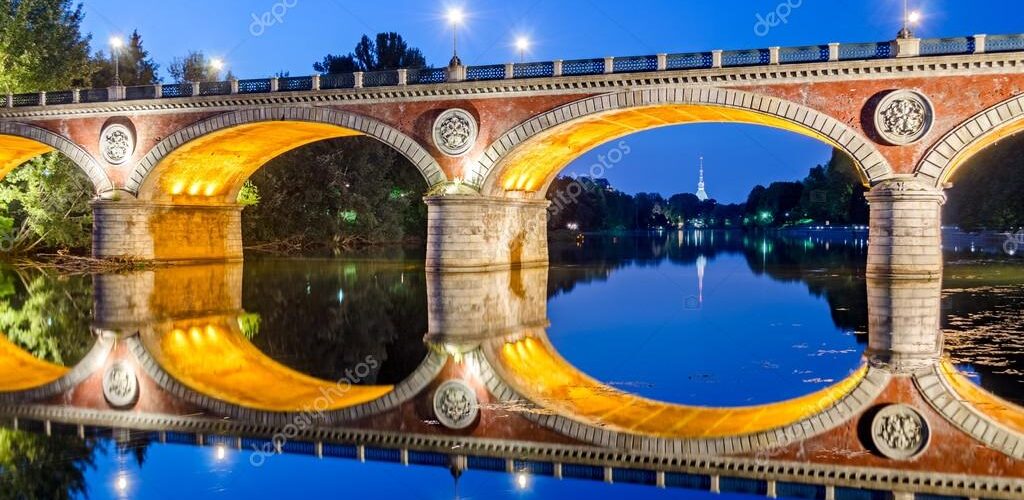
Turin, thanks to the interventions of Guarini, Juvarra and Antonelli is one of the most interesting cities in Italy at the architectural level.
by Fabio Massimo Penna
A decisive impulse to the definition of the Turin skyline is given by the presence in the city, in the second half of the seventeenth century, of the Modena architect Guarino Guarini. Guarini stays in Rome, where he has the opportunity to study the works of Gian Lorenzo Bernini and Francesco Borromini, and then moves from Sicily to Portugal to Spain before landing in the city of Savoy, where he creates masterpieces such as the Chapel of the Holy Shroud, the Church of San Lorenzo and Palazzo Carignano. A teatine frieze, the Modena combined with great expertise theoretical intuitions and architectural innovations giving his works an extraordinary symbolic quality. The dome of the chapel of the Holy Shroud shows an original sequence of six orders of arches "underlying arranged in the shape of a hexagon, oversized and staggered, progressively narrower from the bottom up, until enclosing at the top a circle, above which is placed the lantern" (Piero Adorno – Adriana Mastrangelo, Art and Artists, G. D'Anna Casa Editrice, 2002). It is a bold and unusual technical solution that finds its motivations in the symbolic value that in this sacred building Guarini intends to confer on the triangular figure. The source of inspiration for such a singular masterpiece is to be traced in the church of St. Ivo at the Wisdom of Borromini. Equally boldly innovative is the Church of St. Lawrence. Set to a plant in which the octagonal structure converts to a Greek cross, the church exhibits a dome supported by braided ribs made on sight and is founded on a spectacular concave and convex game that puts into practice "the interpenetration of independent and autonomous spaces" (Pierluigi De Vecchi – Elda Cerchiari, Art in Time – From Lategotico to Rococò, Fabbri Publishing Group, Bompiani, Sonzogno, Etas, Milan, 1991-92). The alternation of concave and convex elements returns to the Turin masterpiece of civil architecture of Guarini, Palazzo Carignano. Complex moved surfaces, characterized by a mixed style, are adorned with lesene that in the upper area are smooth and in the lower area, because of original ornaments, they look made of rustic bugno. The chromaticism of the red-cooked and the incidence of light that bathes a facade with indentations and extroflexions give an additional note of charm to the structure of the building.
Another key figure for the architecture of Turin is that of Filippo Juvarra. The tendency to showmanship of the Mexican architect is perhaps due to his remarkable activity as a theatrical set designer marked by his innovative grandiose sets and prone to three-dimensionality. In the Savoy city Juvarra creates one of the great architectural masterpieces of the eighteenth century, the Basilica of Superga. Built on a hill overlooking the city of Savoy, it is a votive church erected in memory of the victories over France. Set on a central plant connected to a square pronao with Corinthian columns, the church draws inspiration from the Pantheon. The facade is delimited by two bell towers set back from the basilica and the whole shows a certain verticalism to which the agility of the pronao, the light of the surfaces divided by lesene and columns give lightness. The Stupinigi Hunting Casino, centered on an oval central salon from which extend four cross arms of St. Andrew, is topped by a dome on which stands the bronze sculpture of a deer. On the back is an imposing courtyard of octagonal shape and the many windows that connote the construction allow a dialogue between exterior and interior: "Fundamental the relationship between architecture and light that penetrates inside through the large windows of the central body" (Pierluigi De Vecchi – Elda Cerchiari, op. cit.). The richly decorated interior is dominated by the Italian Rococo and is embellished with the use of precious and refined materials.
Completing the Turin skyline is of course the Mole Antonelliana, an authentic city symbol. A masterpiece by the Novarian architect Alessandro Antonelli,the mole houses the National Museum of Cinema, one of the greatest museums of the seventh art. It is one of the most revolutionary buildings of the time (1863-1888), a slender structure with a dome that stands out up to the height of 167 meters and becomes a reference point in the landscape, a sign that towers imperiously in the urban fabric. Antonelli dispenses with any decoration and opts for an exposed structure that shows the metallic structures. In Turin, the architect also builds the historic building called Casa Scaccabarozzi and devises a project to modernize the city centre. Another of his works of enormous architectural value is the dome of St. Gaudenzio in Novara.