LEONARDO AND MICHELANGELO IN FLORENCE. THE FIRST PERIOD
November 28, 2020
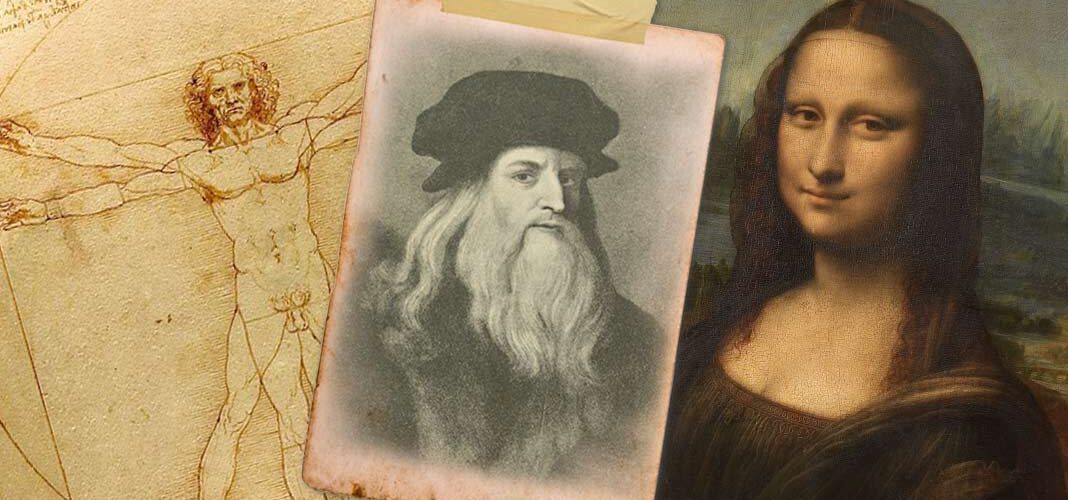
Tuscany in the second half of the fifteenth century saw the birth of two geniuses destined to leave an indelible mark on world art and culture, Leonardo and Michelangelo.
by Fabio Massimo Penna
In the Florence of the second half of the fifteenth century, the workshop of Andrea Del Verrocchio is among the most renowned because painters of the value of Pietro Perugino and Sandro Botticelli pass here but, above all, because Leonardo da Vinci was trained there. As in many workshops of the time in that of Verrocchio, paintings, sculptures, goldsmith works and decorative objects are made. It is a stimulating place full of ideas and when his internship period ends "Leonardo comes out of an environment where he is taught to conceive the human figure, sculpted or painted, not immobile, not isolated, but inserted in space, freely mobile in it ”(Piero Adorno, Italian art - The Renaissance and the Baroque , D'Anna Publishing House, Florence, 1986). Tradition has it that the first signs of Leonardo's talent are recognizable in the angel on the left of the Baptism of Christ by Verrocchio preserved in the Uffizi Gallery while what is considered his first work created independently is The Annunciation , also in the Gallery. of the Uffizi. It is a work that fits into the tradition by adding some original notes such as the flower garden in which the scene is set and the landscape in the background that announces Leonardo's technique of the “nuance”. The Tuscan artist had noticed how in the air there is a dust that makes distant objects blurred, with the outlines that seem to merge with the surrounding atmosphere in a nuanced effect. The work also contains, a strange fact for an artist who studied the human body with commitment, a famous anatomical error in the hand of the Virgin who holds open a book with an unnatural and improbable gesture.
After this period of great agreement with the master Verrocchio, Leonardo detaches himself from the Florentine artistic ways with The adoration of the magi (Uffizi Gallery) which the artist leaves unfinished when he leaves Florence to settle in Milan in 1482. The work shows that which will be a reviled feature of the Tuscan genius or his famous slowness that will make him extremely unwelcome to devote himself to fresco, a technique that requires a certain speed of execution. The panel is composed on diagonal lines with the Madonna and Child detached from the rest, isolated in the midst of a crowd of people. In the background stand out the mighty architecture of a ruined building, which is believed to refer to the collapse of the temple in Jerusalem, crossed by groups of knights engaged in battle. Compared to traditional iconography, the ox and the donkey are absent and there is not the classic procession of characters who come to pay homage to Jesus replaced by the messy crowd of figures around the Virgin and Child.
Another fundamental year is 1475 which sees the birth in Caprese of another colossus of the Renaissance, Michelangelo Buonarroti . His training takes place in Florence first at the Ghirlandaio workshop and later in the garden of San Marco, where Lorenzo the Magnificent had placed some ancient masterpieces. These are years in which the artist refines his sculptural technique that he defines as "upbeat", that is, consisting in removing from the material all that is superfluous the figure contained within it hides. The profound study of ancient statues is evident in the marble relief with the Battle of the Centaurs (preserved in the Florentine Casa Buonarroti), a work that refers to Greek mythology and the representations of war scenes that adorn the Roman sarcophagi. The entanglement of the bodies of the centaurs is centered on a figure in the center of the composition who, with the gesture of his right arm, generates the circular movement that dominates the work. Also at Casa Buonarroti is the relief of the Madonna della Scala in which the artist from Caprese turns his attention to Donatello's studies on the “stiacciato” technique, with thin reliefs that give the work an ethereal and evanescent aspect. The Bargello museum preserves the sculpture of Bacchus , one of the first works in which the young artist put to good use the studies on the ancient that he carried out in his first Roman period and is also one of the first in which the extreme finishing of the work on marble creates wonderful “translucent” effects. The statue of the god takes up the weighting, or chiasmus, polycletean with the right arm and left leg of the sculpture bearing while the left arm and right leg are at rest.