THE DRAMA OF EARTHQUAKES. WHEN ITALY SHAKES FROM MESSINA TO AMATRICE
May 20, 2020
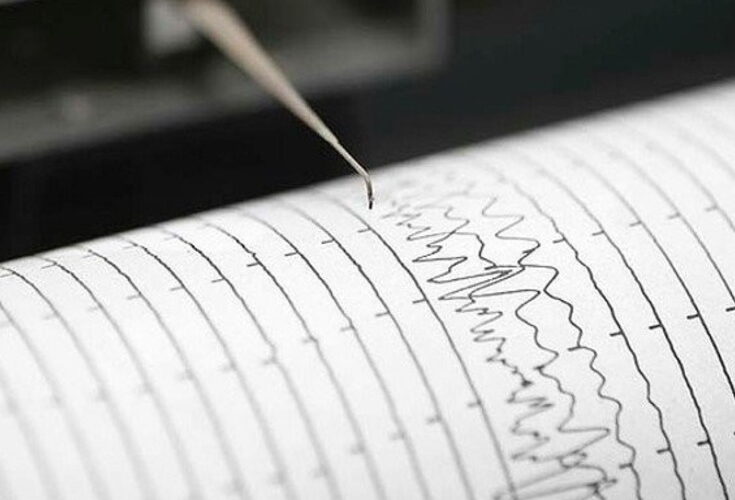
Let's see what happens when an earthquake strikes. We also remember some of the disasters that have hit Italy.
by Fabio Massimo Penna
Sometimes the earth trembles. And when it does, it causes terrifying disasters. Let's see how. Earthquake violence is classified according to magnitude (Richter scale) and intensity (Mercalli scale). Magnitude refers to the amount of energy that is released at the epicentre of the quake while the intensity calculates the size of the damage caused on the earth's surface. At the base of these terrifying telluric tremors are the sudden movements, underground, of rocky masses, which can also be pushed against other rocky masses. Normally some tremors anticipate the main one which is usually followed by so-called aftershocks. The vibratory phenomenon, caused by seismic waves, can last a few seconds or a few minutes. The great problem with earthquakes is that of preventing, defending territories from this devastating natural disaster. A great effort is made to try to set forecast parameters that can, thanks to the analysis of forerunner events, allow to understand in advance the moment when the event will occur, the epicenter from which the earthquake will spread and its intensity. Given the unpredictability of these phenomena, forecasts have not yet reached a degree of certainty and reliability that will guarantee a high level of safety. The earthquakes of the past are normally analysed to prepare the defences for any future earthquakes. An important signal is the so-called microscox, vibration that man cannot pick up without the help of appropriate instruments and which can indicate the characteristics of the major event.
Given the difficulties of anticipating events, the best defence against quakes is entrusted to architecture. Unfortunately, this passive protection has a high cost. Buildings built in areas that science and past events have identified as places of seismic risk must have structures that can withstand the impact with the earthquake. Italy, after the devastating seismic events that hit Messina and Reggio Calabria in 1908, established the division of municipalities according to their seismic coefficient. These are "first-class seismic communities, in which strong constraints must be applied in the design and construction of the artefacts – second-class seismic municipalities, subjected to less restrictive constraints – third-class municipalities, declared non-seismic and therefore free from specific constraints" (Piero Dagradi, Man-Environment-Society, introduction to human geography, Pàtron publisher, Bologna, 1995). Unfortunately, in the beautiful country there are many old buildings, capable of resisting a weak resistance to the stresses due to earthquakes and in these cases consolidation interventions must be carried out: "the most widespread techniques involve the stiffening of the floors and the application of pulls to increase cohesion. Metal nets are also used on both sides of the masonry with the task of hindering the collapse off the floor" (Piero Dagradi, op. cit.). Japan, which has a long practice with seismic events, has developed an approach that avoids rigid resistance to the earthquake in favor of great flexibility, with the creation of buildings able to accommodate telluric upheavals in conform to the movements, both susopsers and undulating, of the terrain. Called to build Kansai Airport in Osaka Bay, Japan, the great Italian architect Renzo Piano understood the importance of the Japanese approach to earthquakes and in this regard he realized his project: "The use of fluid and lightweight structures has ensured the overall safety of the intervention. As Piano recalled for the occasion: 'the fury of the elements breaks down the oak, but it does not break the barrel, light and flexible' "(Architecture and the protagonists – Renzo Piano, Editorial Group L' Espresso S.P.A., Rome, 2007).
Italy is, by its shape, a territory prone to frequent earthquakes. What is considered the Quintessential Italian Catastrophe is the Messina earthquake of 1908. The event, which occurred on the morning of December 28, 1908, was extremely violent, with a magnitude of 7.1 MW, or of intensity equal to the eleventh degree of the Mercalli scale. The quake killed a very large number of people, with some estimates that the death toll would have exceeded 100,000, while other sources say 80,000 people have died. The deadly tremors hit the Strait of Messina, devastating Messina and Reggio Calabria, cities that were almost razed to the ground. To make matters worse, a tsunami occurred a few minutes after the seismic event. The earthquake was later analyzed by important scholars and a particularly interesting work is collected in Mario Baratta's essay The Hornet-Mexican Seismic Catastrophe. Among the tragedies that have struck our country in more recent years we mention the earthquake that struck the Friuli in 1976, in the area of Udine, with a tremor of 6.4 on the Richter scale and a thousand victims and that of Irpinia in 1908 with magnitude 6.9 (ten on the Mercalli scale) that caused the death of about three thousand people. In Umbria and Marche there were heavy tremors in 1997 (eighth degree of the Mercalli scale) with 11 deaths and in Abruzzo in 2009 with 309 deaths (magnitude on Richter scale 5.9). Emilia Romagna was hit in 2012 with 5.9 magnitude tremors and 27 fatalities. Central Italy between 2016 and 2017 was devastated by various seismic events that affected a large area between Lazio, Umbria and Marche da Amatrice in Accumuli to Arquata del Tronto. The most powerful quake hit a magnitude 6.5 on the Richter scale. In the end, 303 deaths were recorded and the sequence was as follows: the earthquake of August 24, 2016 was followed by those of 26 and 30 October 2016 and that of January 18, 2017.