Milan. CATHEDRAL AND THEATRE AT SCALE ICONIC PLACES OF THE CITY
30th April 2020
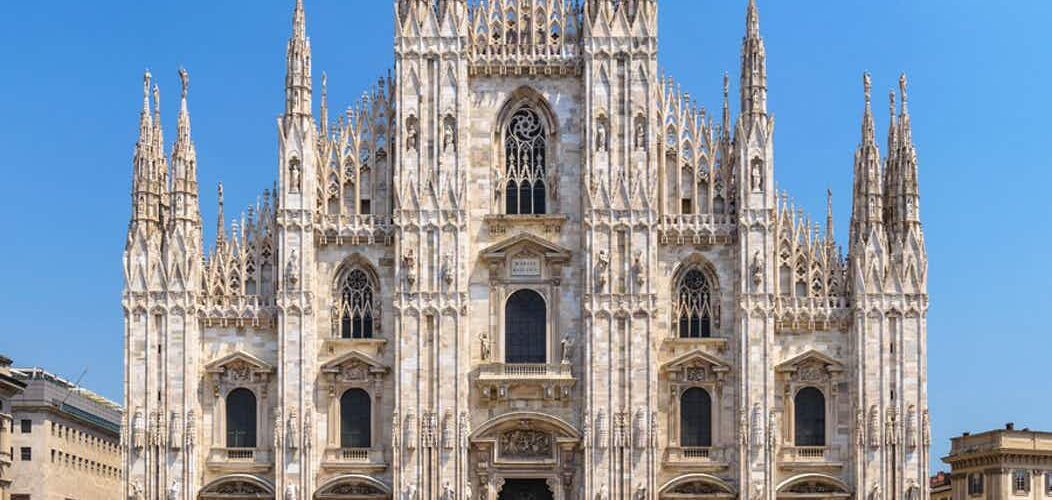
You can't talk about Milan without immediately thinking about the Cathedral or La Scala, a symbol places known all over the world
by Fabio Massimo Penna
The greatest masterpiece of late-Gothic architecture is the Cathedral of Milan, a work whose construction begins in 1386 and is extended over the centuries to be completed in the nineteenth century. The interventions that followed over time ended up compromising the stylistic cohesion of the whole and belittling one of the main characteristics of gothic, the verticalism of the cathedrals. The facade also shows this aesthetic mix in the alternation of arches with a high-pitched and all-sixth and spires and pinnacles with eardrums and arched pediment. Over the centuries, Italian, French and German architects and workers intervened, bringing the architectural elements related to their formation, while not losing touch with the Lombard tradition. Returning to the facade, together with the spires, with their conical or pyramidal shape, contribute to the late-Gothic appearance of the building the kittens, decorative plant motifs with wrapped or arched leaves. There are also rampant arches, structures designed to contain, absorbing, the lateral thrusts of the construction. The plan of the Cathedral is longitudinal, with a Latin cross, and divided into five aisles with the whole lightened by the slender and oblong side windows from which penetrates a light that, filtered by the stained glass windows, takes on a fantastic and imaginative air. The only negative note is the decorative overabundance that comes at the expense of a clear perception of the architectural structure.
Let's move now to admire another landmark of Milan the La Scala Theatre. Giuseppe Piermarini, considered one of the most important architects of Italian neoclassicism, was built between 1776 and 1778. The structure is a model for nineteenth-century theatres and shows a classical facade, crowned by an eardrum containing a bas-relief, with semi-columns and lesene, eardrum windows and is moved by the presence of three adjective bodies. The avant-body in the center, characterized by the elegance of the smooth bug that embellishes the lower part of the building, is a closed porch in the upper area by a terrace and is characterized by two side openings that served to transit the carriages allowing important spectators to access the theater from a sheltered area, useful element especially in rainy evenings. Inside, Piermarini shows a great deal of attention to practicalities. With great expertise, the Umbrian architect perfectly relocates the spaces for various functions, from the areas of representation to the services. An eclectic man with multiple interests, Piermarini has a wide knowledge of physics and acoustics that he employs to create a room with perfect sound output. In Milan, the Umbrian architect also designed the Belgian Palace inspired by the Palace of Caserta and created a majestic facade that has a slightly protruding avant-garde in the center, framed by ionic semi-columns topped with a large eardrum. The ground floor is flat, while the plan frames highlight the horizontal trend of the construction.
Other iconic buildings of the city are the Velasca Tower,built between 1957 and 1958 by the BBPR studio, consisting of architects Gianluigi Banfi, Ludovico Belgiumioso, Enrico Peressutti and Ernesto Nathan Rogers, and the Pirelli skyscraper (known as the Pirellone) designed by architect and designer Gio Ponti with the collaboration of Fornaroli, Rosselli and others while the structural calculation is by Luigi.